A partnership built on a single conviction
Makuta is a Congolese fintech licensed by the Banque Centrale du Congo, founded in Kinshasa in November 2019 and committed to developing innovative digital solutions for the Congolese digital economy. Its platform was built for the realities of the local market, where mobile money, bank rails, international card schemes and cash coexist — each historically on its own infrastructure.
MobiWire comes with more than thirty years of device expertise as one of the world's leading ODMs, combining French engineering with Chinese industrial capability. The two companies began working together in 2024.
The collaboration runs between Kinshasa and Paris. Makuta brings market knowledge, merchant relationships and field intelligence; MobiWire designs hardware designed for demanding operating conditions and the flexibility to adapt it. That proximity has allowed both teams to move quickly, from device selection through to deployment across four provinces.
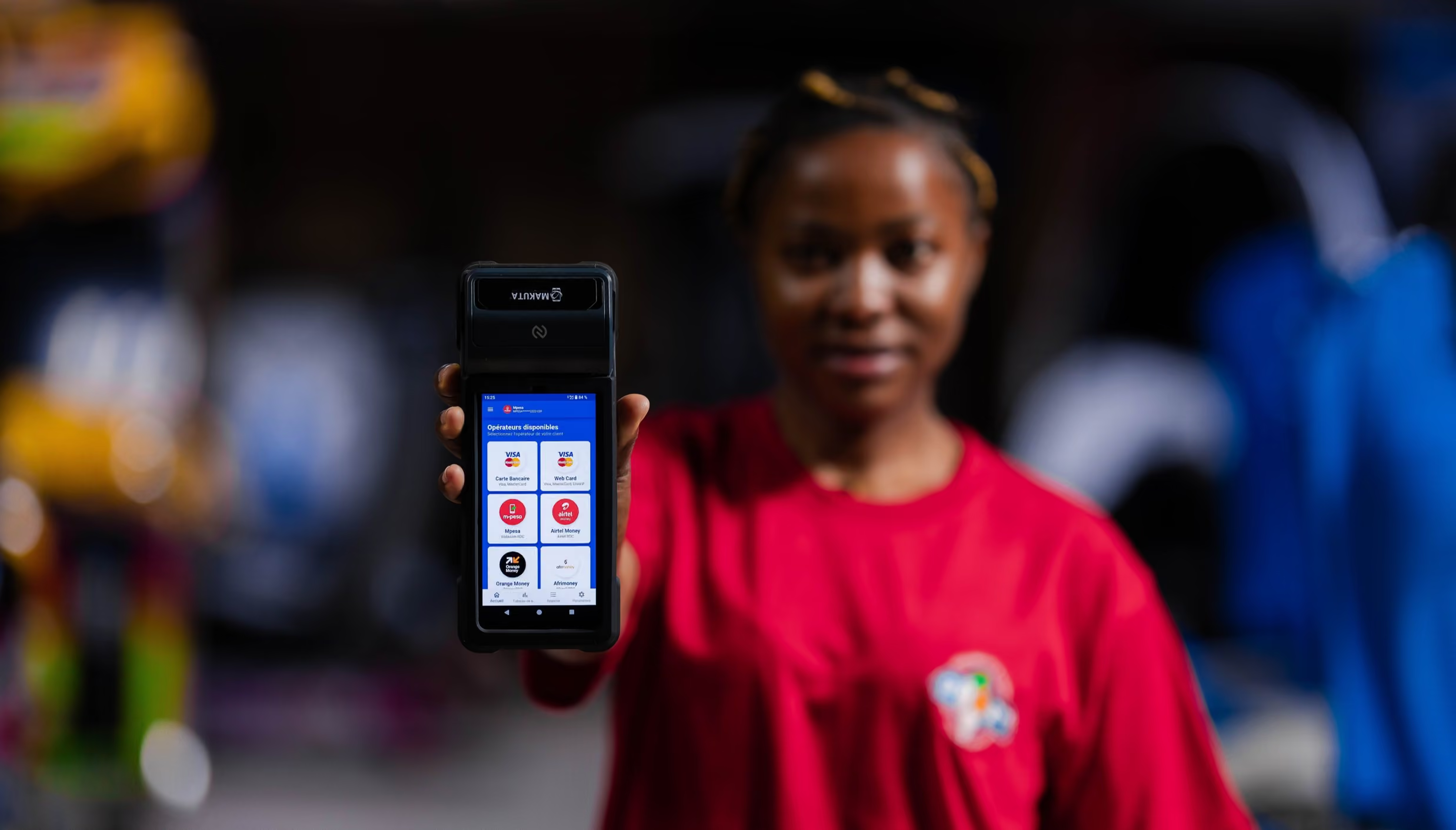
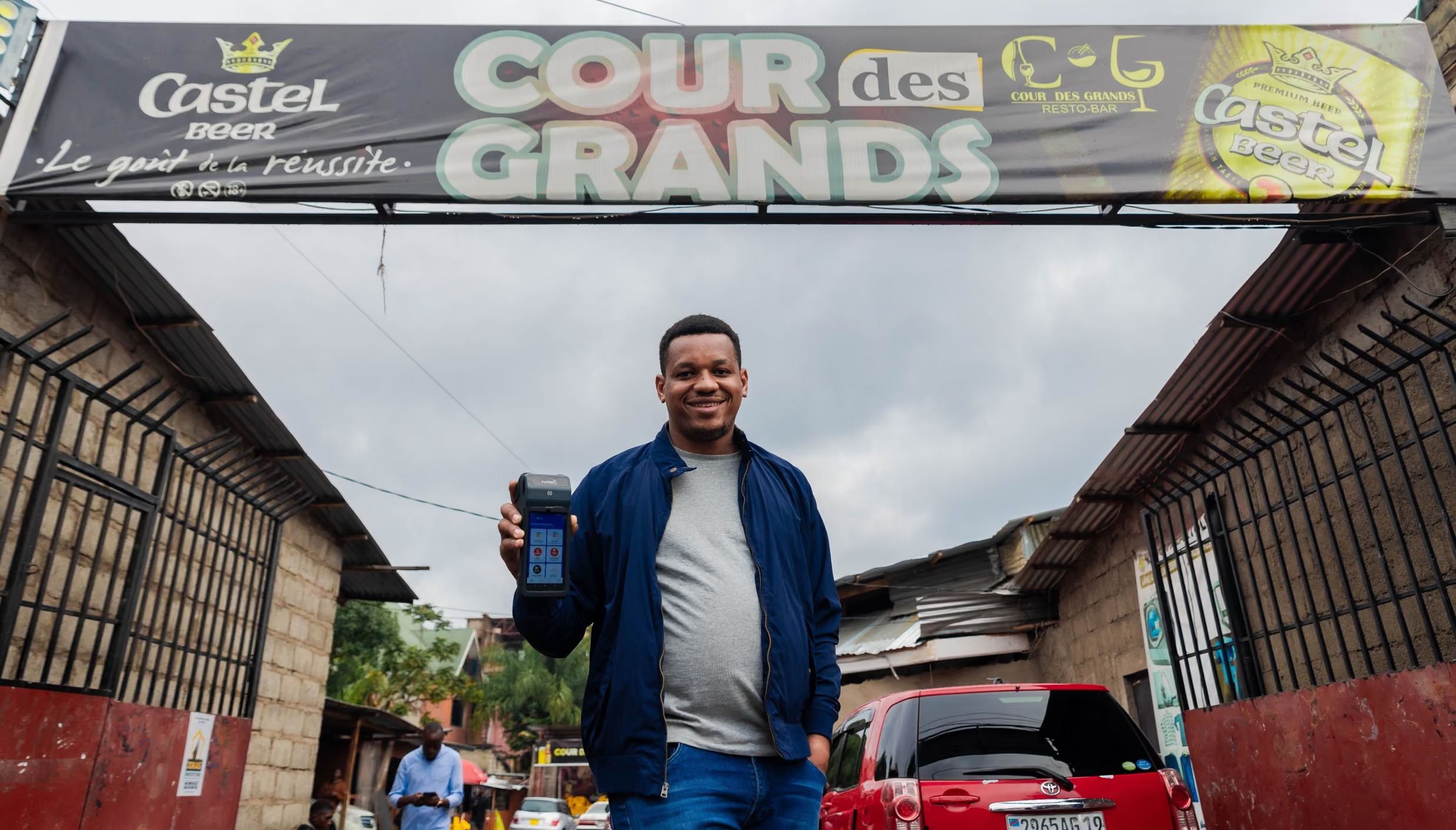
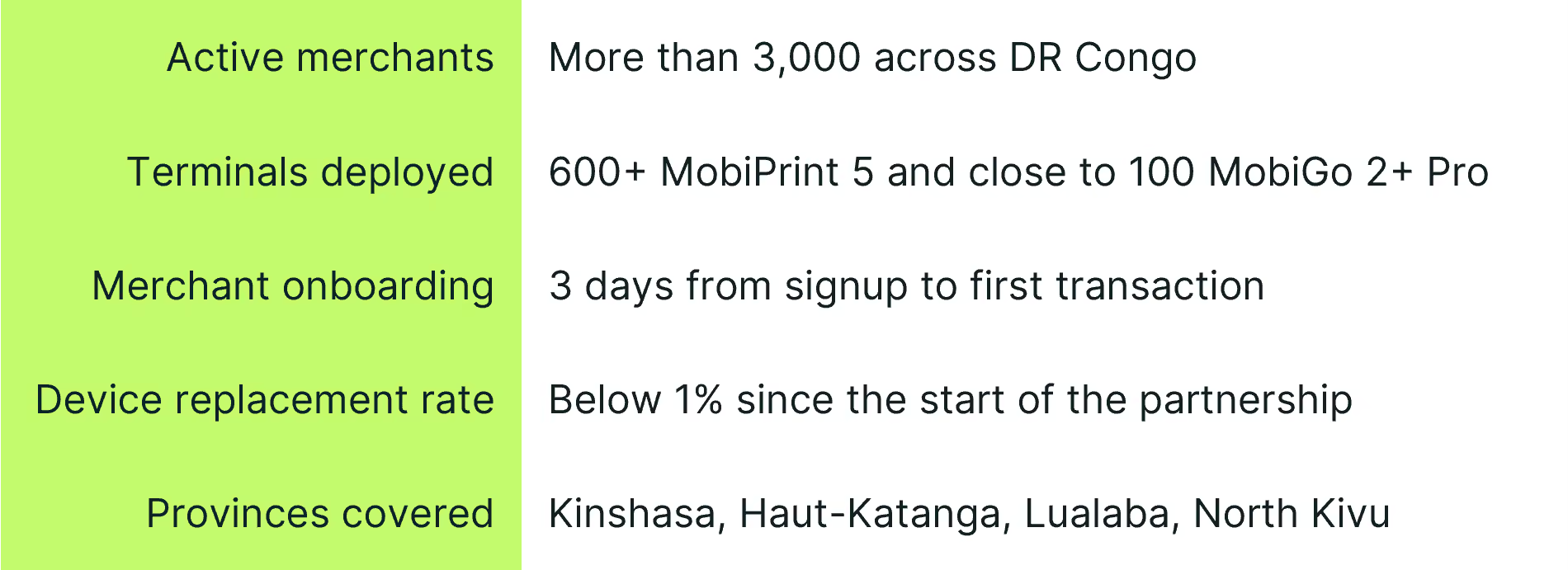
Today, Makuta runs on MobiWire's MobiPrint 5 and MobiGo 2+ Pro terminals in restaurants, pharmacies and retail businesses across DR Congo. The two companies share a common ambition: to make digital payment acceptance simple, reliable and available to every merchant — whatever their size, sector or location.
Where every payment method is a separate system
In the Democratic Republic of the Congo, accepting payment is rarely simple. The country has one of the lowest levels of financial inclusion in Sub-Saharan Africa: as of 2022, 38.5% of adults were financially included, against a regional average of 55%.¹ Card ownership is lower still at the last available measure, 6% of adultsheld a debit card and 1% a credit card.²
Physical banking infrastructure is scarce across a territory the size of Western Europe.The country counted 445 bank service points in 2022 371 branches and 74 advanced counters alongside 817 ATMs, spread across 14commercial banks.³ Building a branch costs between USD 150,000 and 200,000,which makes traditional expansion into secondary cities and rural areaseconomically difficult.
Mobile money has filled most of that gap. Financial inclusion rose from 9% of adultsin 2014 to 38.5% in 2022, andreached 58% by April 2026 against a bancarisationrate of only 25 to 30%.⁴ Access, in other words, is now digital rather thanbank-based. Registered mobile money accounts grew from 22.2 million in March2020 to 37.3 million in 2022, of which 11.8 million were active, and theregulator counted roughly 34 million mobile money subscriptions in 2025,equivalent to 30.6% of the population.⁵ The market remains concentrated inthree operators M-Pesa (15.4 million active users), Airtel Money (11.1 million) and Orange Money (7.7 million) which historically ran as closed loops, while several banks developed their own electronic wallets, adding further rails rather than consolidating them.⁶
That fragmentation is now being addressed from above: the Central bank launched Musolo,a national switch, in 2025 to interconnect operators, with an interbank grouping for electronic payments due by March 2026.⁷ Whether adoption followsthe mandate is the open question.
The merchant problem
For a merchant, this creates a practical difficulty. Customers arrive holding value in different wallets, on different networks, with different apps — and increasingly with cards issued by different banks. Serving all of them has meant operating several systems in parallel, each with its own settlement andreconciliation.
Most merchants have simply defaulted to cash. Electronic acceptance remains rare, terminals are seen as an added cost rather than an investment, and some retailers actively discount for cash payment. The consequence is a ceiling on basket size, a permanent security exposure, and customers turned away becausethe value they hold sits on the wrong rail.
Small and informal businesses — restaurants, pharmacies, neighbourhoodretail — are the most affected and the least served by traditional point-of-sale economics.
A clear regulatory direction
The 2018 law on payment and settlement systems established the framework for a modernised national payment system, and the central bank has since moved to enable interoperability between mobile money operators and financial institutions.
The National Financial Inclusion Strategy sets expanded access as a national objective.
What has been missing is convergence at the point where it matters most — the merchant counter.
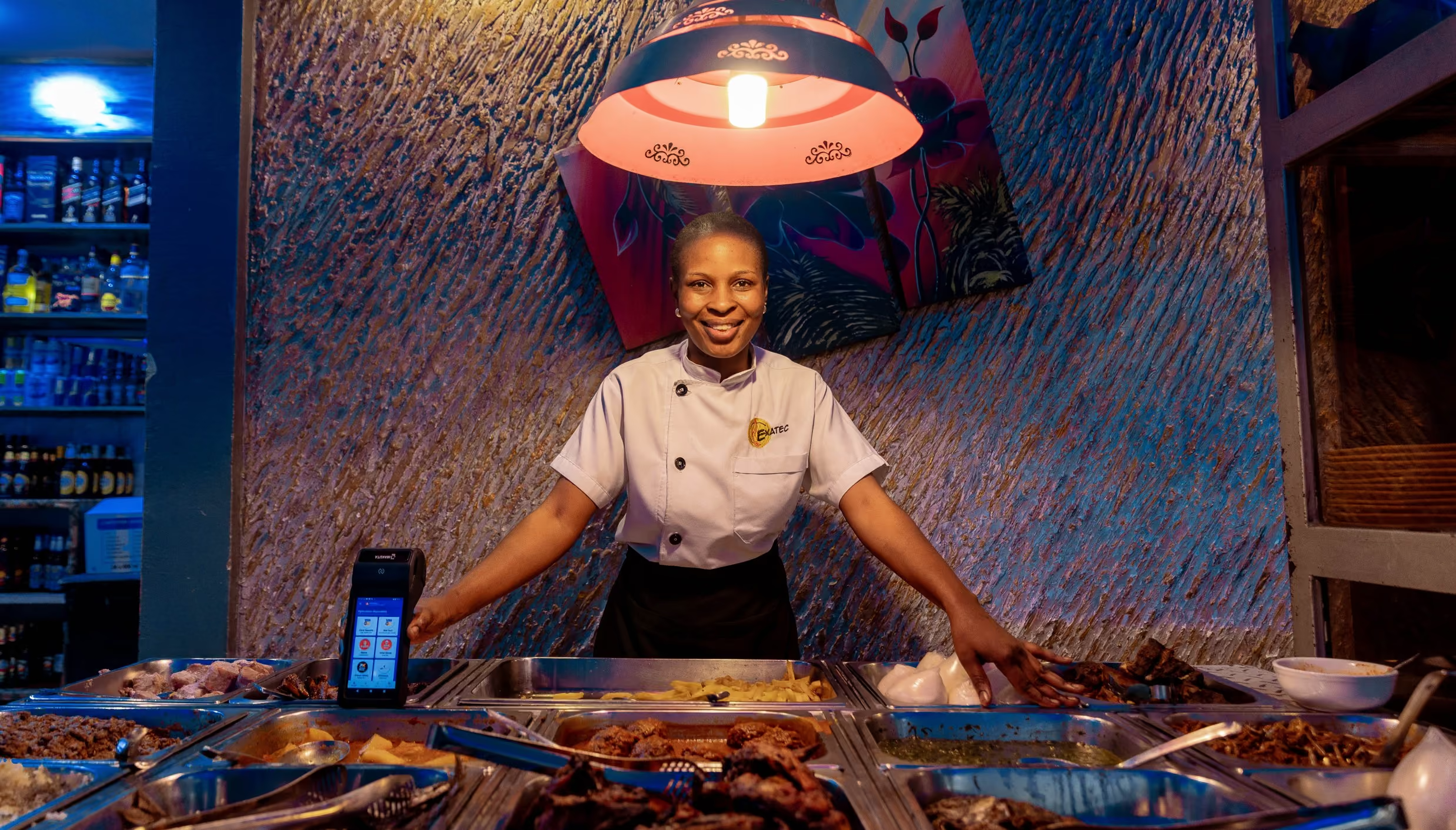
Makuta on MobiWire: convergent acceptance in a single terminal
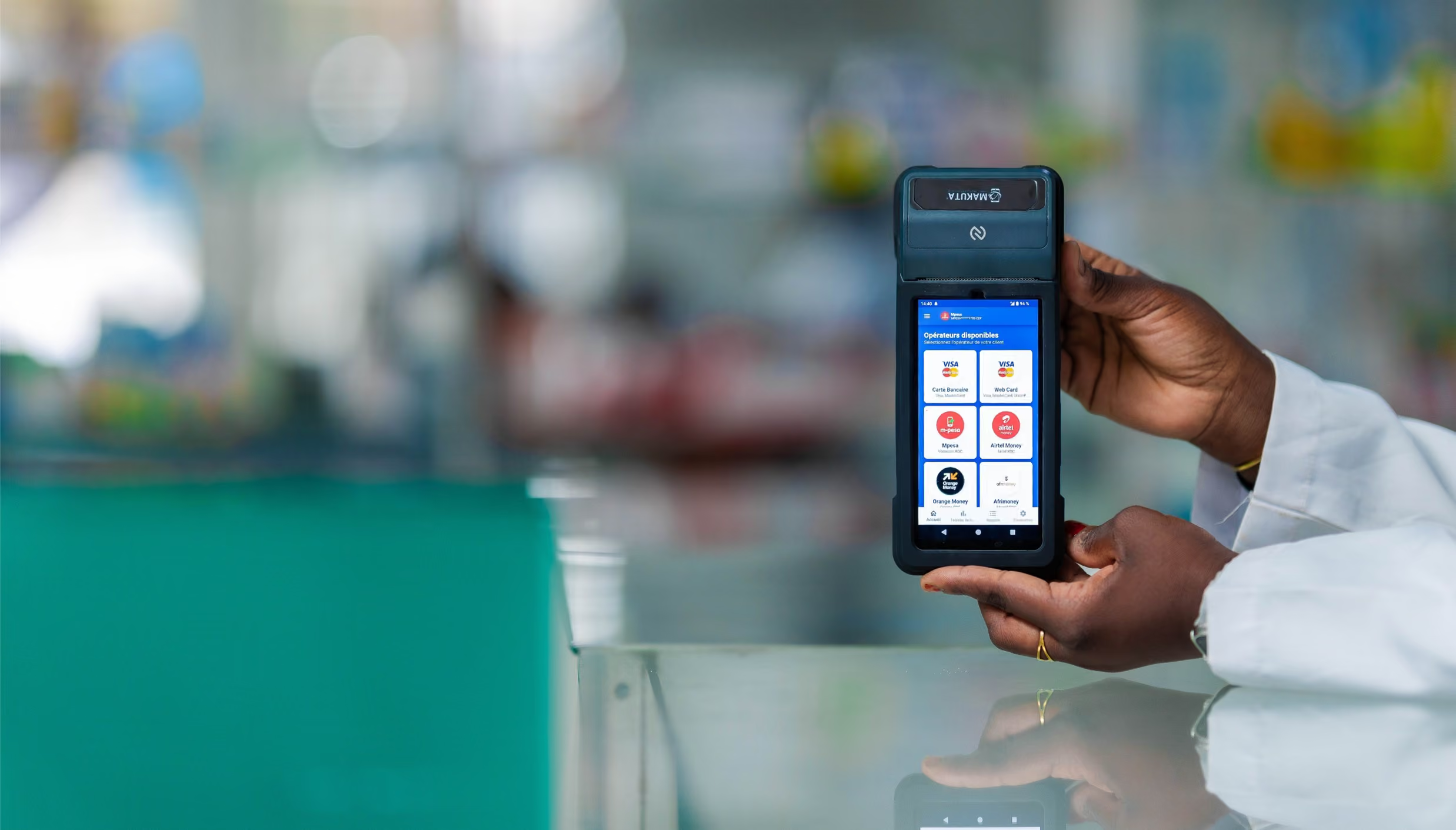
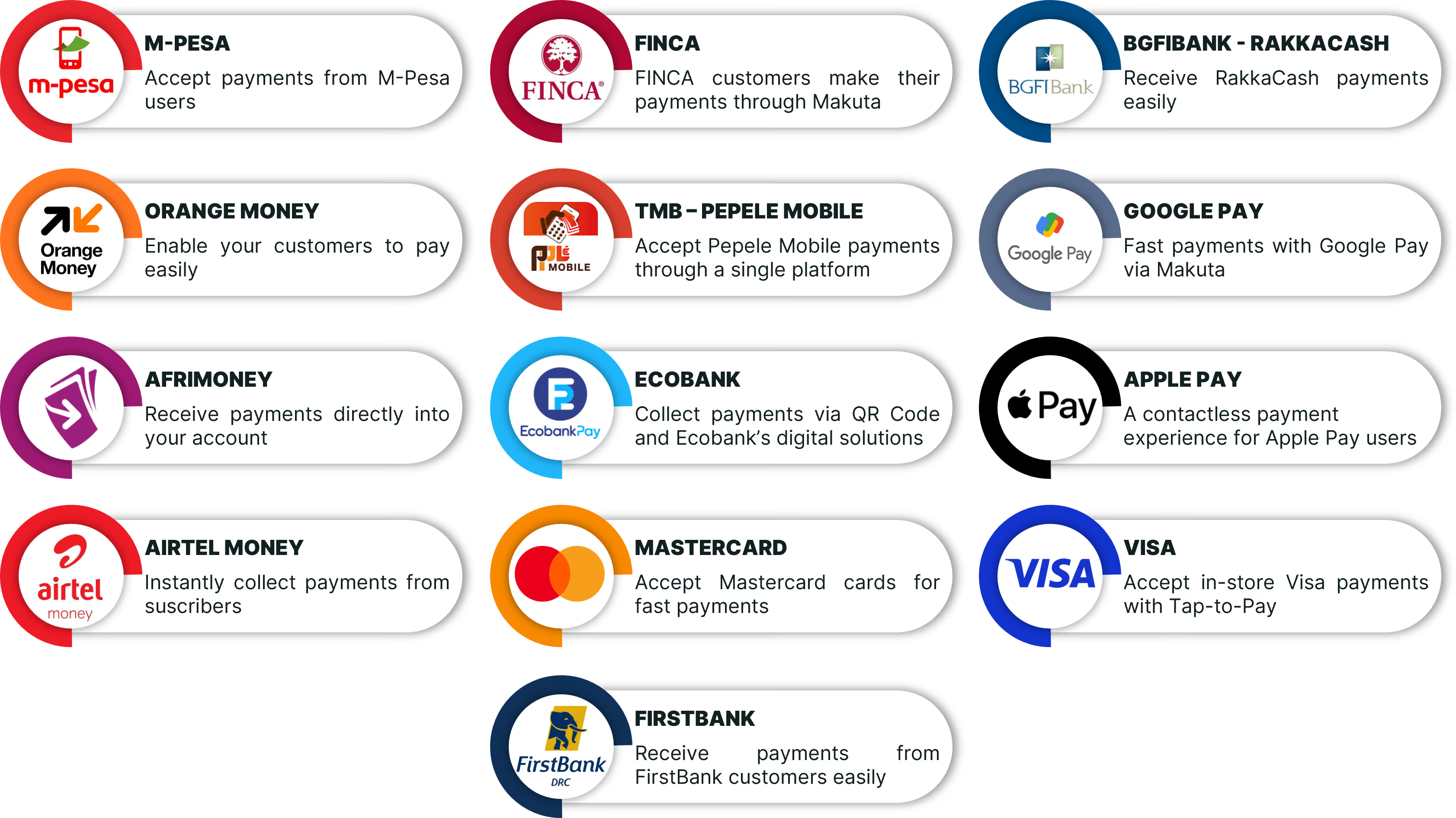
Makuta's answer to fragmentation is consolidation. On one MobiWire terminal, a Congolese merchant can accept:
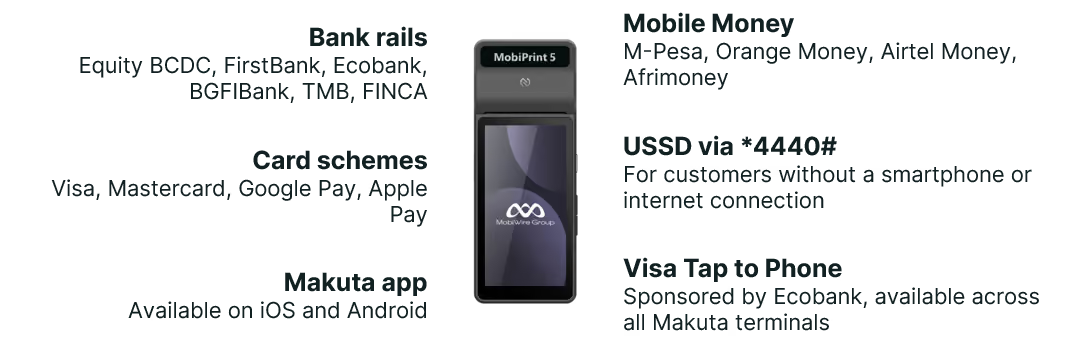
The USSD channel matters as much as the others. With unique mobile broad band penetration at around 21% and 4G reaching under a fifth of the population,¹¹ an app-only solution would exclude most of the population. Operating *4440# extends acceptance to customers who have a phone but not a smartphone, and to areas where data coverage is unreliable.
Two form factors, one experience
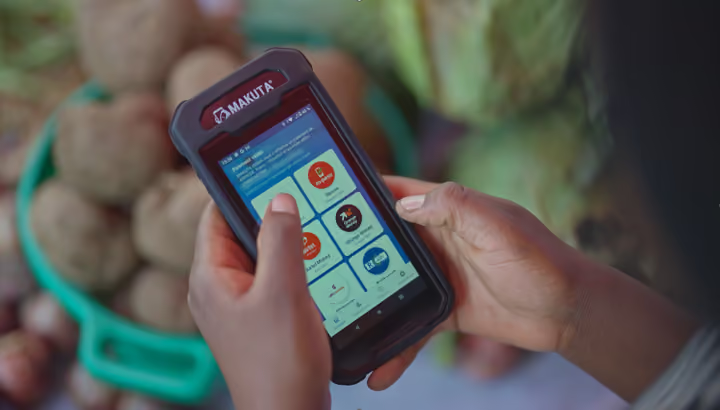
Makuta is deployed on two MobiWire devices, chosen for different merchant environments.
The MobiPrint 5 is an Android POS with an integrated printer, suited to larger retailers and fixed counter setups where a physical receipt is expected. In a market where many customers are transacting digitally for the first time, a printed receiptis not a legacy requirement — it is a trust mechanism.
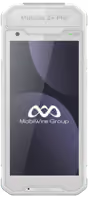
The MobiGo 2+Pro serves smaller businesses, issuing electronic receipts rather than printed ones and lowering the cost of entry into digital acceptance.
Both devices support exactly the same payment methods. Whichever a merchant chooses, the range of accepted rails isidentical — the only difference is the receipt.
Engineered for the operating environment
Device reliability is not a secondary consideration in this market. Electricity access reaches a minority of households, connectivity varies sharply between the maincities and the interior, and merchants trade long hours in demanding physical conditions.

The MobiWire terminals support dual connectivity over 4G and Wi-Fi, so merchants can operateon whichever signal is available, and continue trading through interruptions. Battery endurance is sized for extended trading days without dependable mainspower, and the hardware is built to withstand dust, heat and humidity.
Remote fleet management allows Makuta to update, monitor and support terminals overthe air — a decisive capability in a country the size of Western Europe, wheresending a technician to a merchant is rarely practical.
The results are visible in thefield: since the start of the partnership, the device replacement rate has remained below 1%, with the few cases observed attributable mainly to handling.
What changes for a Congolese merchant?
Makuta launched in 2019 and today serves more than 3,000 active merchants across fourprovinces — Kinshasa, Haut-Katanga (Lubumbashi), Lualaba (Kolwezi) and NorthKivu (Goma). A merchant can be onboarded and taking their first transaction within three days.
From cash-only to every payment method
Before Makuta, most merchants in these markets only accepted cash, or at best a single mobile money wallet — turning away customers whose funds sat elsewhere. Today,every payment channel is available on one terminal, including cash, allowing centralised accounting.

Checkout is faster. Reconciliation between several systems is no longer necessary. Allcollections are centralized into a single account. For a small business, thatis the difference between digital payment being an administrative burden andbeing an operational advantage.
Inclusion through acceptance
Financial inclusion in DR Congo is usually measured in accounts opened. The Makuta deployment suggests a complementary measure: where those accounts can actuallybeused.
By consolidating mobile money, bank rails, international schemes and USSD onto asingle terminal, Makuta makes digital acceptance viable for businesses thattraditional point-of-sale economics have never reached — and gives consumers areason to use the digital funds they already hold. It is inclusion delivered atthe counter rather than at the branch.
"In DR Congo, a merchant should not have to choose which customersthey can serve. By bringing mobile money, cards and bank payments together onone payment platform, Makuta enables merchants to accept payments from morecustomers, regardless of how they choose to pay.This is financial inclusion in practice: making digital payments accessibleand acceptance possible everywhere."
M. Rickain LUBO
Looking ahead
The Makuta deployment demonstrates that convergent acceptance can be delivered in acomplex, fragmented market — and that the constraints of that market producesolutions more integrated than those found in more mature ones. Makuta and MobiWire continue to extend coverage and add rails as the Congolese ecosystem develops,with a model directly transferable to other African markets facing comparable fragmentation.

Sources
1, 3 & 5. ”Financial inclusion rate, bankservice points, ATMs, number of banks, mobile money accounts (2022)”, “Bankservice points, ATMs, number of banks (2022)“ & ” Mobile money accounts:2022 figures”
Ministry of Finance / BCC, Stratégie Nationale d'Inclusion Financière 2023–2028
DeskEco — DRC 38.5% vs Sub-Saharanaverage of 55%
2. Card ownership (debit 6%, credit1%)
Global Findex 2025 — Congo, Dem. Rep. country file
4. Financial inclusion 58% vs bancarisation25–30% (April 2026)
Actualite.cd — BCC Governor André Wameso press briefing, 28 April 2026
Congo Quotidien
5. Mobile money accounts: 2022 and2025 figures
2025 figures (ARPTC data) — FintechMedias
6. Operator market shares, activeusers and revenues (2025)
Bankable Africa — Airtel Money, M-Pesa and Orange Money results
7. Musolonational switch and interbank grouping
Radio Okapi — Switch Musolo, the end of barriers between mobile money operators
DeskEco — BCC plans to launch the Musolo switc
Bankable Africa — interbank grouping for electronic payments, dueend-March 2026
MicroSave — Interoperability in the DRC:20 years of evolution (2005–2025)
8. World Bank, RépubliqueDémocratique du Congo — Évaluation de l'économie numérique (DE4A), 2021, citingGlobal Findex2017 and Banque Centrale du Congo data.
9. Loi n° 18/019 du 09 juillet 2018relative aux systèmes de paiement et de règlement des titres.
10. Instruction BCC n° 43, 24 March2020.
11. WorldBank, DE4A country assessment, 2021 (20.9% unique mobile broadband subscribers;4G population coverage 17.9%, 2019).